A no-pressure guide to the fastest-growing conversation in aesthetics right now — and how to decide if preventative treatment is right for you.
Quick answer: There is no single "right age" to start Botox. Most providers begin discussing preventative, low-dose treatment with patients in their mid-to-late 20s once dynamic lines — the ones that appear only when you frown, squint, or raise your eyebrows — start becoming visible. The decision comes down to your own skin, your goals, and finding a licensed, experienced injector who will treat conservatively rather than aggressively.
If you've spent any time on TikTok this year, you've probably seen it: another 26-year-old filming her "baby Botox" appointment, captioning it something like "future me says thank you." The hashtag has become one of the defining beauty conversations of 2026, and it's not a fringe trend — NPR reports physicians seeing a real uptick in 20-somethings, and even some teens, seeking preventative treatment since the pandemic, and dermatologists interviewed by national news outlets report their Botox clientele skewing noticeably younger each year, including patients seeking treatment for lines that haven't even formed yet. If you've found yourself Googling "is Botox in your 20s worth it" at 11pm, you're part of a very large, very real group of people asking the same question. Here's a grounded answer.
What "Preventative Botox" Actually Means
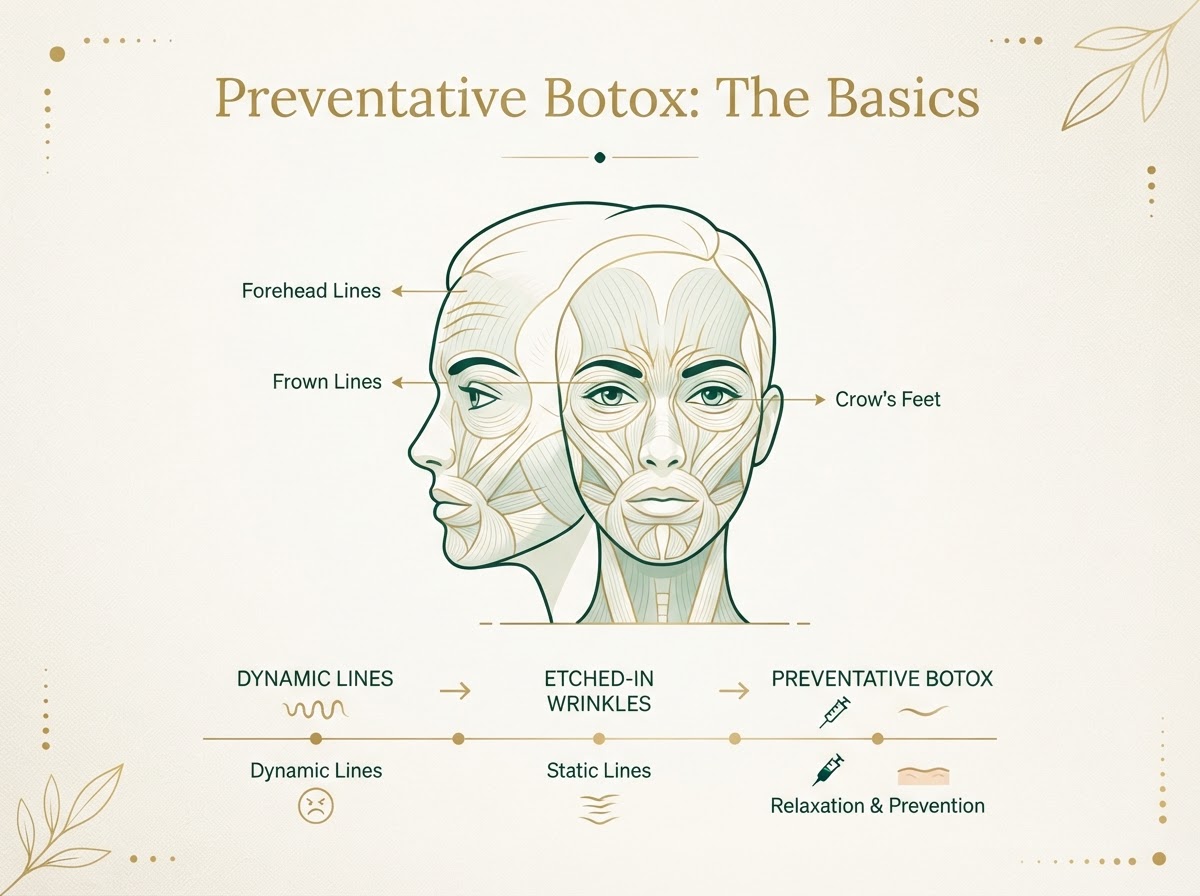
Wrinkles generally start as dynamic lines — creases that only show up when a muscle contracts, like the lines between your eyebrows when you frown or the crow's feet that appear when you smile. Over years of repeated movement, those dynamic lines can etch themselves into the skin and become static — visible even when your face is completely relaxed. Preventative Botox works by softening the muscle movement that causes those lines before they've had years to set in, which is different from traditional Botox aimed at already-established, deeper wrinkles.
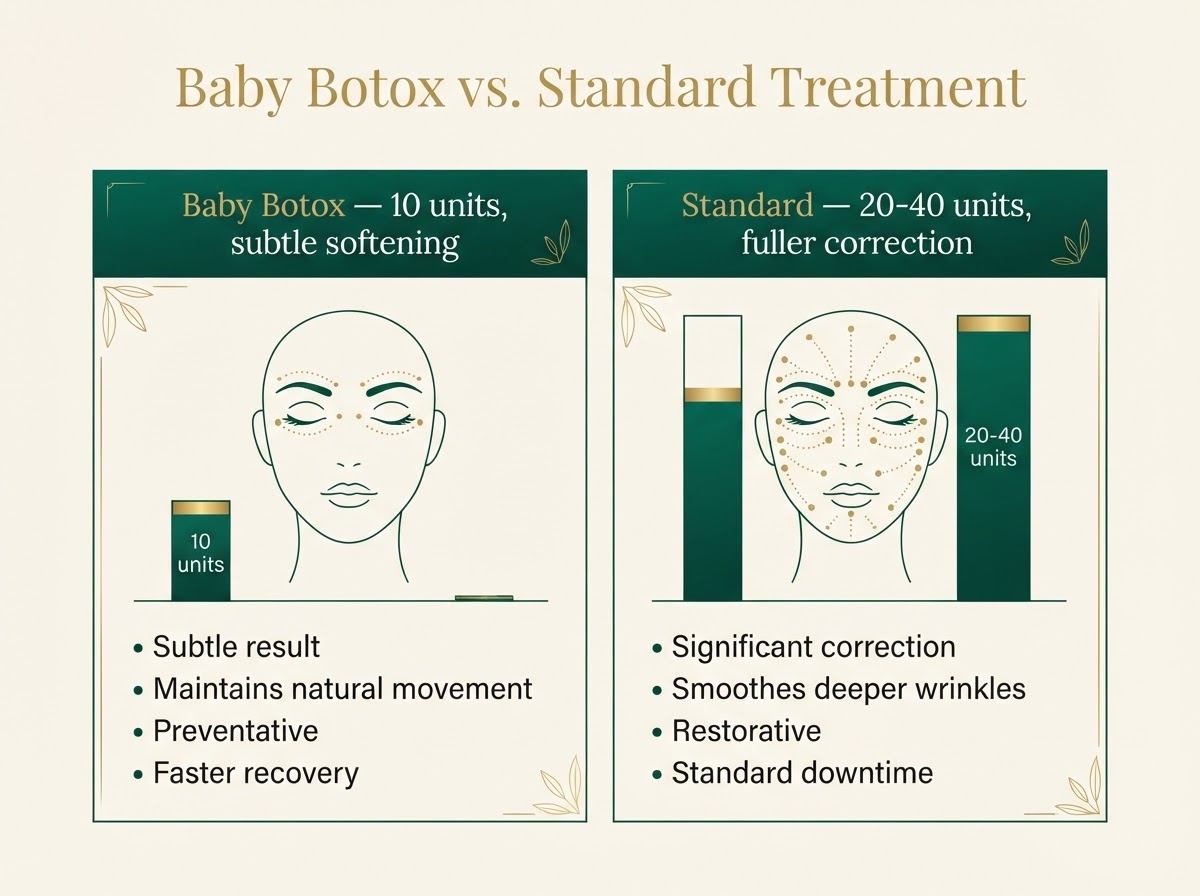
Used conservatively, this is often described in the industry as "micro-Botox" or "baby Botox" — smaller doses spread more precisely, designed to soften movement rather than eliminate it entirely. That distinction matters, because it's also the difference between a natural, expressive result and the frozen, over-treated look that scares a lot of people away from ever trying it.
It's worth being honest here too: not every expert agrees preventative Botox is a slam-dunk. Some dermatologists caution against overselling it as guaranteed wrinkle prevention, and the American Society of Plastic Surgeons notes that early, strategic treatment may help slow the development of certain expression lines, but it isn't a one-size-fits-all solution or a guarantee — a nuance worth knowing before you book, so you're going in with realistic expectations rather than a promise no injector can actually make.
Is 20-Something or Early-30s "Too Young"?
There's no medical rule that sets a minimum age beyond FDA labeling for adults, and the trend data backs up that this is now common, not unusual. Reporting on the shift toward early intervention has cited plastic surgery data showing a 28% increase in Botox procedures among people aged 20 to 29, and more recent industry surveys suggest that trajectory has only continued, with a large majority of surveyed plastic surgeons expecting continued growth in early-maintenance cosmetic procedures among people in their 20s and 30s.
What actually matters more than a specific birthday is: Do you have visible dynamic lines that bother you? Do you spend a lot of time on video calls, in photos, or in the sun, all of which accelerate how quickly dynamic lines become permanent? Are you looking for a subtle, "still fully yourself" result rather than a dramatic change? If the answer to those is yes, a consultation is a reasonable next step — not a commitment, just a conversation.
Botox, Daxxify, Xeomin, or Jeuveau: Does the Brand Matter?
One of the most common points of confusion for first-timers is the number of brand names now on the market. The short version, per an evidence-based comparison of FDA-approved neurotoxins, is that the choice of brand is less important than the skill and technique of the injector for most cosmetic patients, and the biggest variable in your result isn't the label on the vial — it's the skill of the person holding the needle. Still, there are real differences worth knowing:
Botox — the original and most widely recognized name, with the longest safety track record and the most published research.
Daxxify — formulated with a peptide stabilizer instead of the traditional protein complex, and studied for a longer duration of results than standard wrinkle relaxers. Clinical trials show it extends results to roughly six months on average, with some patients maintaining results up to nine, compared to three to four months for Botox, meaning fewer appointments per year.
Xeomin — sometimes called the "naked" toxin because it doesn't contain the accessory proteins the others do, which some providers believe may reduce the (already rare) chance of the body building resistance to it over time.
Jeuveau — chemically very similar to Botox and typically positioned at a somewhat lower price point, making it a popular choice for younger, budget-conscious first-timers.
Because expertise and dosing precision outweigh which brand is used, the more useful question for your consultation isn't "which brand is best" — it's "which brand fits my goals, budget, and how often I want to come in."

What Does Botox Actually Cost?
This is usually the question people are most nervous to ask out loud, so here it is in plain numbers. A pharmacist-reviewed 2026 medical reference puts typical per-unit pricing at roughly $15 to $25, with a full treatment session commonly running $200 to $1,000 or more depending on how many units are needed. A single treatment area like the forehead or the "elevens" between the brows typically uses somewhere between 10 and 30 units for a first-timer or preventative dose, which puts a realistic first appointment in the neighborhood of a couple hundred dollars rather than four figures — for context, one dermatologist told national news outlets that a "baby Botox" patient might receive as few as 10 units per area, versus 20 to 40 units for a standard treatment, and that the American Society of Plastic Surgeons puts the average full Botox treatment cost at around $530 nationally, though that figure typically reflects multi-area treatment rather than a light, single-area preventative dose.
The honest takeaway: a preventative, single-area appointment is one of the more accessible ways to try Botox for the first time, both in dose and in dollars — it's a very different investment than a full upper-face treatment.
What to Expect at Your First Appointment
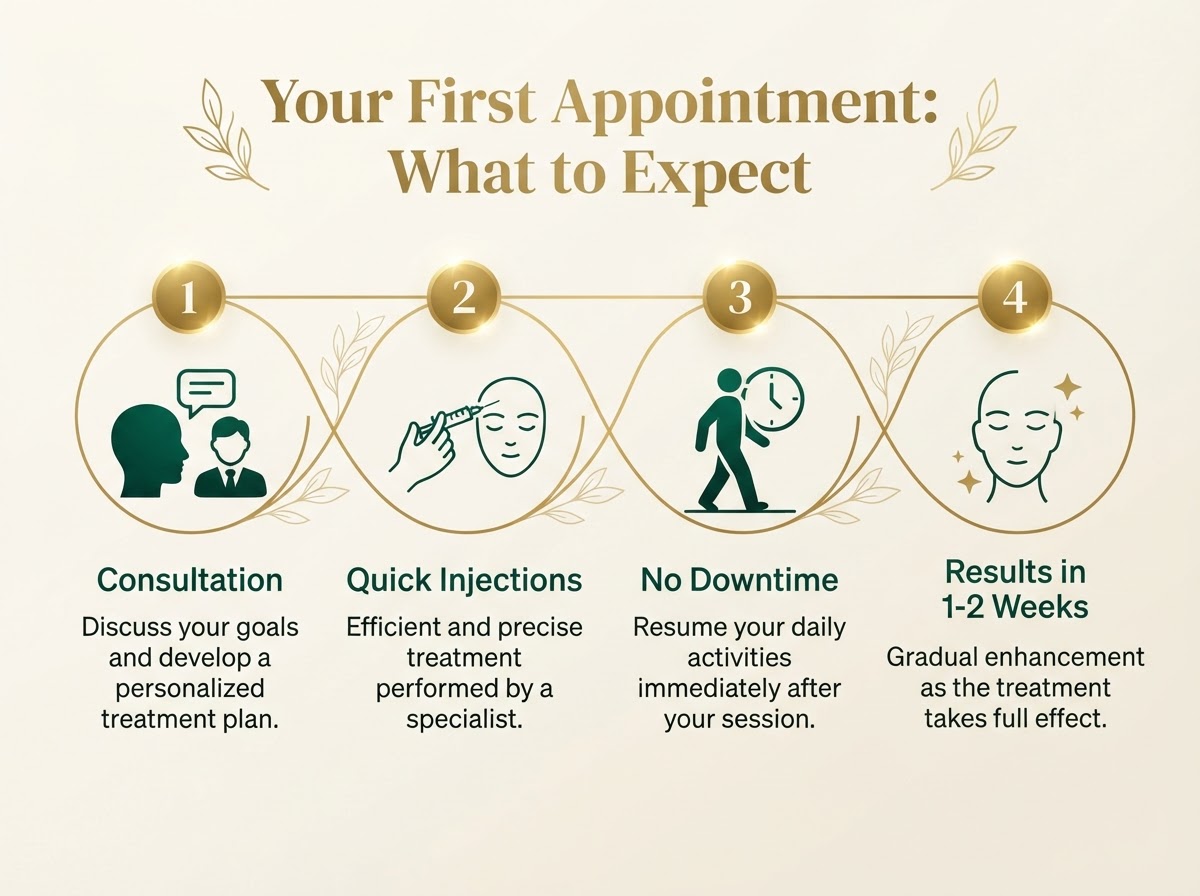
If you've never done this before, the nerves are completely normal — plenty of people describe the same pre-appointment anxiety before realizing the actual treatment is quick and far less dramatic than they expected, a pattern echoed in first-timer guides that walk through exactly what happens during a session. In general, here's the arc:
Consultation first. A good injector will look at your face at rest and while you make expressions, ask about your goals, and talk you through a conservative starting dose — especially for a first, preventative treatment.
The injections themselves take minutes, not hours, using a very fine needle. Most people describe it as a quick pinch rather than significant pain.
There's typically little to no downtime. You can usually go back to normal activities the same day, with a few standard aftercare notes (avoiding rubbing the area, staying upright for a few hours).
Results aren't immediate. It generally takes several days to two weeks to see the full effect, which is why providers usually schedule a follow-up check-in around the two-week mark.
Questions Worth Asking Before You Book
Because the injector matters more than the brand, a short screening conversation is worth it no matter where you go:
What is your license and training background, and who provides medical oversight for the practice?
What product are you recommending for me, and why — not just what's cheapest or most popular?
How many units do you typically use for a first, preventative treatment in this area?
What does follow-up look like if I need a small adjustment?
This is also where local, RN-led practices with visible physician oversight have a real edge over anonymous "injection bars" — it's a fair, reasonable thing to ask about, and a confident provider will answer without hesitation.
A Kearney-Area Perspective
Kearney has more aesthetic options than it used to, which is genuinely good news for patients — it means more competition on both price and care quality. What hasn't changed is that this is still a medical procedure, done with a prescription product, and the provider's training matters as much as anything else on the price list. Arkatiea Aesthetics & Wellness, founded by Katie Redburn, RN — a registered nurse with 15+ years of healthcare experience — offers Botox, Daxxify, Xeomin, and Jeuveau under the medical oversight of Hoder Independent Medical Consulting, PC, with appointments available Monday through Saturday in Kearney.
If you've been wondering whether now is the right time to start, the lowest-pressure next step is simply a conversation. Arkatiea offers consultations to talk through your skin, your goals, and a realistic, conservative starting plan — no obligation, no upsell script. Call 816-442-5520 or book online to get a straight answer about what's right for your face, not just what's trending.
Whatever you decide, the most important thing is choosing a provider who treats conservatively, explains the "why" behind their recommendation, and never makes you feel rushed into more than you asked for. That's a better filter than any brand name or TikTok trend.